Dedicated pharmacist now at the heart of the cardiology team
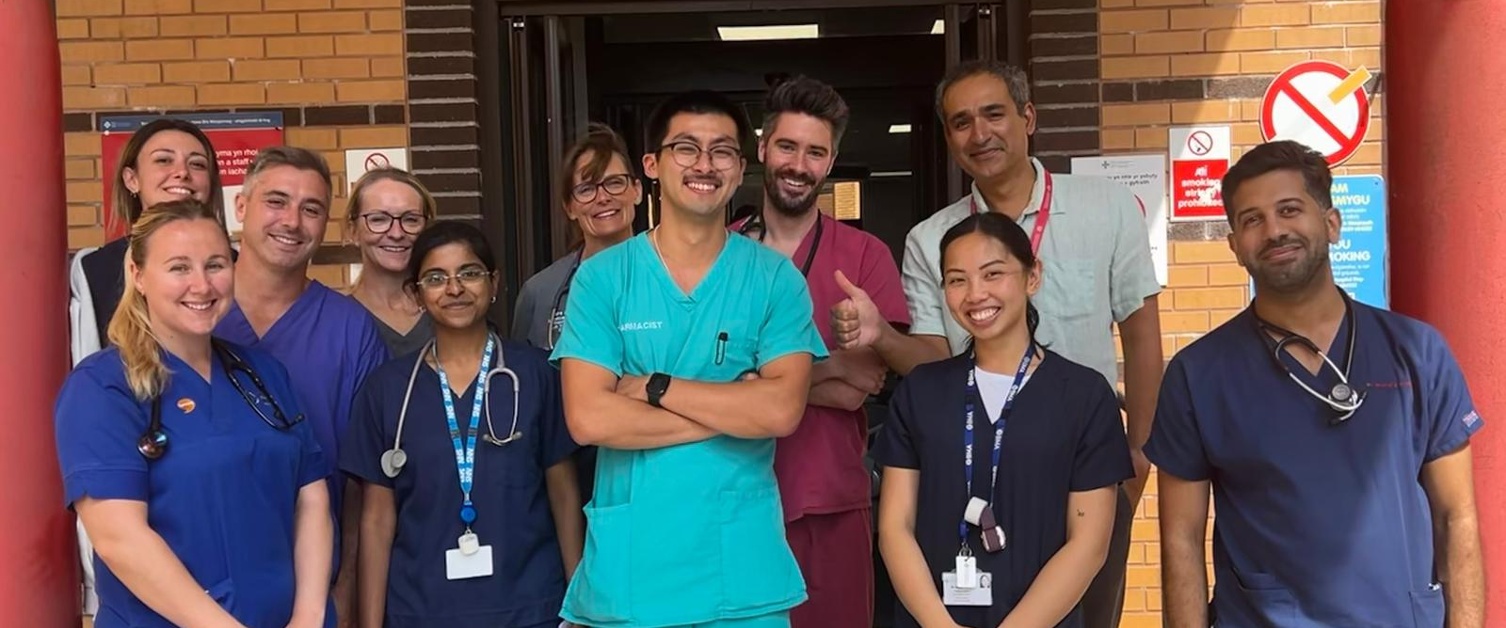
Introducing a dedicated pharmacist to the Swansea Bay cardiology team has had a positive impact on patient care – reducing medication errors, readmissions and complications.
All cardiac patients can be heavily reliant on medication to prolong their lives, often requiring complex medication regimes. Errors in prescribing or medication management can lead to some patents being re-admitted to hospital, suffering medication-related or having extended hospital stays.
But since a dedicated advanced prescribing pharmacist joined the cardiology multidisciplinary team in January, the positive impact has been clear.
Prescribing errors have come down since the start of the year, directly improving patient care; when a pharmacist led on prescribing changes, the error rate for discharges dropped from 22% to 1.4%.
A resulting more efficient use of medications is also saving money and making better use of NHS resources.
£46,209 has already been saved, with a projected further £86,342 in savings for 2025/26 from another therapy switch.
Before, it took almost eight hours to resolve medication queries, but with the pharmacist involvement this had been reduced to five minutes. Other benefits include:
• Having the pharmacist involved in discharge planning streamlines processes and reduces delays.
• Improved continuity of care after the patient leaves the hospital.
• Better coordination between hospital and the community.
• A focus on guideline compliant prescribing, formulary adherence, and cost-effective medication use, such as supporting a switch to cheaper generic or biosimilar drugs.
- Plus it is better for the planet, already saving over 284Kg of CO2
Senior Pharmacist for Patient Services, Gareth Chapple said: “The Royal Pharmaceutical Society in Wales undertook a national review of hospital pharmacy services, which highlighted the need for pharmacists to be more embedded within multidisciplinary teams (MDTs). That recommendation, supported by Welsh Government, really set the scene for this work.
“Over the years, hospital pharmacy has evolved significantly — from being primarily dispensary-based, to expanding the clinical impact role and working on wards, and now towards a model where we are fully integrated into the MDT.
“Pharmacists now complete four years of university study, one pre-registration year across different sectors, followed by a two-year postgraduate clinical diploma and further training in independent prescribing. It’s a medicines-focused skillset that needs to be used in the most efficient and impactful way possible.
“By embedding a prescribing pharmacist within the cardiology MDT, they’re able to attend ward rounds, make key prescribing interventions, and directly contribute to clinical decisions alongside consultants and the wider team.
“They carry out medication reviews, ensure appropriate formulary choices, and monitor for adherence to national and local guidelines.
“Thanks to Swansea Bay’s electronic prescribing system, we’ve been able to collect an incredible amount of data that helps us measure the impact of these interventions — from improvements in prescribing accuracy and discharge turnaround times to reductions in medication errors.”
A data collection over a four-month period confirmed 437 hours of delays in discharges occurred when a pharmacist was not involved in prescribing – scaled up for the year equating to 1,311 hours.
Having a pharmacist within the MDT means they can take a proactive role in optimising medicines use, ensuring prescribing is safe, accurate, and aligned with clinical guidelines.
The approach shifts the pharmacy role from reactive medication supply to active participation in patient care decisions, which directly benefits patients through better outcomes and fewer medication related errors.
The innovative way of working was recognised in the 2025 NHS Wales Awards where it was shortlisted in the Effective Care Award category.
Pharmacist Joshua Lau said: “As the prescribing pharmacist within cardiology, I’m fortunate to be closely involved in shaping patient care from the moment they arrive on the ward.
“Working as part of the post-take medical team allows me to use my clinical training at the point of decision-making, helping to optimise medicines and support safe, effective treatment plans.
“Pharmacy practice has evolved significantly, and this role reflects how our skills are now integrated more fully into patient care. Being part of the ward round gives me the opportunity to discuss treatments in real time, contribute to patient specific care, and see the positive impact that appropriate prescribing can have on a patient’s journey through hospital.
“Working collaboratively with the medical team ensures that patients receive the most effective medication support, which is essential in reducing the risk of future cardiovascular events.”
Gareth Chapple added: “We are already in the early stages of embedding prescribing pharmacists within cardio-thoracic, vascular and endocrinology services.
“However, our focus initially will be to roll out where appropriate across the Morriston site and Swansea Bay Health Board.
“With the right clinical leadership, structure, and measurement, pharmacist-led prescribing can be transformative—not just for patients, but for the health system as a whole.”
Rydym yn croesawu gohebiaeth a galwadau ffôn yn y Gymraeg neu'r Saesneg. Atebir gohebiaeth Gymraeg yn y Gymraeg, ac ni fydd hyn yn arwain at oedi. Mae’r dudalen hon ar gael yn Gymraeg drwy bwyso’r botwm ar y dde ar frig y dudalen.
We welcome correspondence and telephone calls in Welsh or English. Welsh language correspondence will be replied to in Welsh, and this will not lead to a delay. This page is available in Welsh by clicking ‘Cymraeg’ at the top right of this page.