People educated and encouraged to exercise to help improve condition
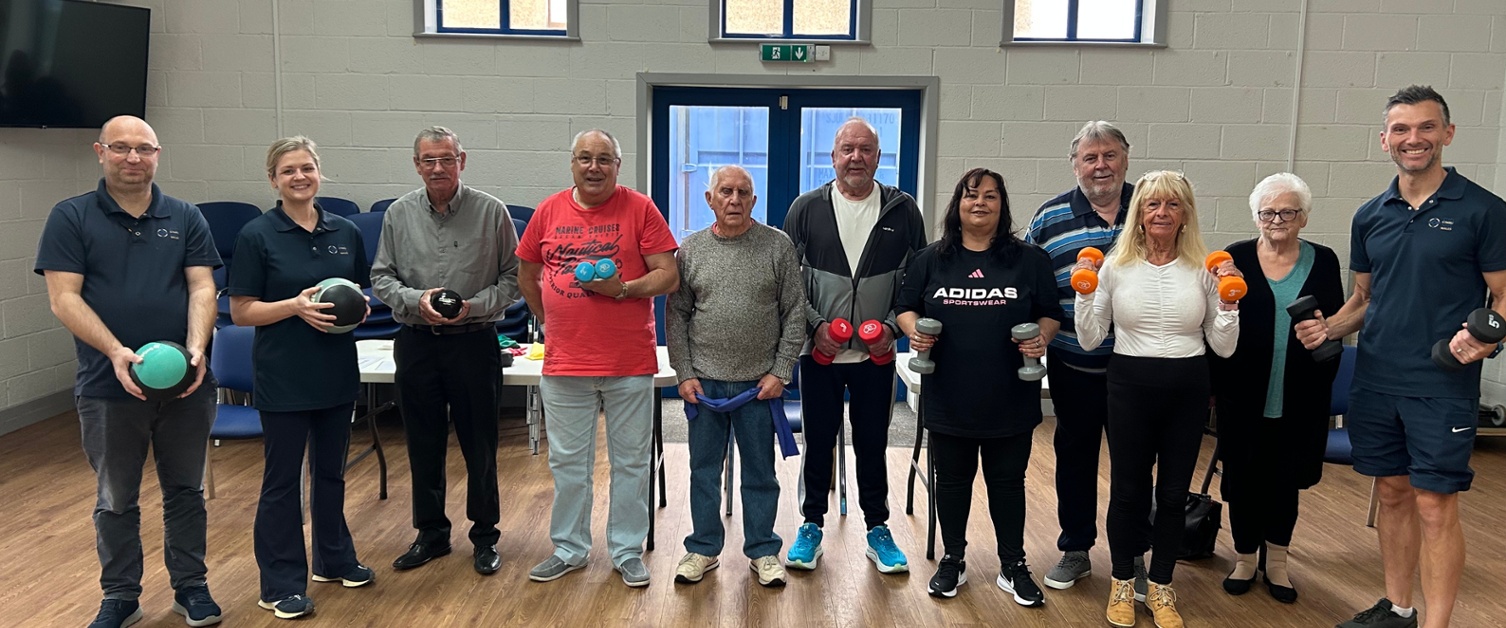
People living with chronic respiratory issues are exercising and learning self-management techniques to help improve their symptoms.
Swansea Bay’s pulmonary rehabilitation service provides a six-week course for patients with chronic obstructive pulmonary disease (COPD).
During November, COPD Awareness Month, we’ll highlight the services, self-management guidance and support available to Swansea Bay patients.
The course is made up of around an hour of exercise, followed by an hour of education and discussion covering topics such as nutrition, medication and lifestyle.
Pictured: Staff and participants at the St Paul’s Centre pulmonary rehabilitation session.
A multi-professional team of physiotherapists, occupational therapists, dietitians, technicians and respiratory nurses run the sessions ensuring a variety of topics can be covered.
It is delivered in community venues across Swansea and Neath Port Talbot, making it easier for people to access the sessions as they are closer to home.
The overall aim of the course is to not only improve people’s symptoms but also provide information and techniques to help them manage their condition better at home.
Nicola Perry-Gower, the health board’s pulmonary rehabilitation lead, said: “Much like smoking cessation, pulmonary rehabilitation is an evidence-based treatment for patients with chronic respiratory disease.
“It is a vital programme that not only helps improve physical health but also enhances emotional and psychological wellbeing, making it an essential component of care for individuals living with chronic respiratory disease.
“The sessions run for two hours, twice a week for six weeks.
“Each person has an individualised exercise programme, so it is very person-centred, and we deliver strengthening and cardiovascular exercises.
“Then during the education side of it, we look at managing flare-ups of COPD, managing breathlessness, sleep, anxiety and stress, medication, nutrition, energy conversation and more.
“It is a fantastic service which is based in community venues, which means it is closer to the patient’s home, so they hopefully find it easier to access."
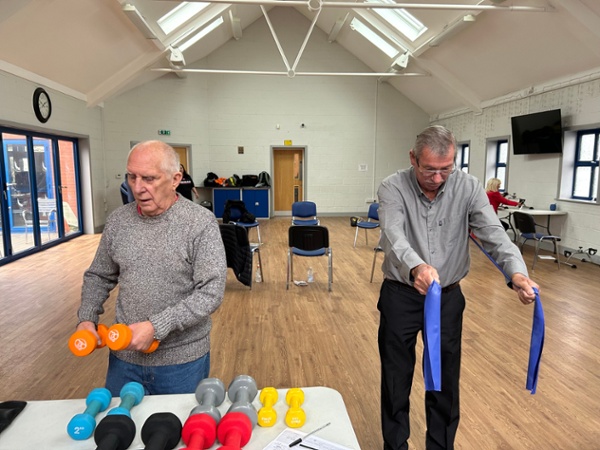
Participants use dumbbells, resistance bands, kettlebells, as well as doing exercises based around walking, standing from chairs and raising their legs.
Jeffrey Hiatt from Port Talbot has been attending the course at the St Paul’s Centre after his consultant recommended it to him.
“The exercises are good and have helped me a lot,” the 61-year-old said.
“We do a 10-metre walk, use dumbbells, a stepper machine, chest presses and other things. We push ourselves as best as we can.
“When I first started going to the sessions, I was using a walking stick but now I don’t use it and I walk to the class, which takes about 10 minutes.
“I have found it really beneficial, and I do some of the exercises at home too.
“I also use the breathing techniques we’ve been shown to help with going up the stairs.”
Suzanne Prosser, aged 70 and from Port Talbot, has also found the course useful with helping to control her breathlessness symptoms.
“It has given me a better quality of life,” she said.
“Whereas before I thought I couldn’t do things because of my breathlessness, now I know how to deal with it. I have learnt to pace myself and have been given breathing exercises to do.
“When you panic about breathlessness, you start to breathe faster but now I’m more in control of that. If I hadn’t been referred to the course, I wouldn’t have known how to control it.
“I have noticed improvements since coming, I can definitely do more, and I’ve got more energy. It has been fantastic, and the staff are fabulous and so helpful.”
Kayleigh Owen is one of the pulmonary rehabilitation physiotherapists who helps to deliver the programme in the community.
She explained the overall aim was to help improve people’s breathlessness symptoms, as well as their muscle strength.
“The exercise section is made up of functional exercises, which are things they would be doing at home,” Kayleigh said.
“It helps to improve their fitness and build their muscle strength.
“We also link with instructors from the National Exercise Referral Scheme (NERS), who help deliver sessions and encourage people to attend the NERS sessions at the end of the eight weeks, to continue with their exercising.
“We talk about their medications to make sure they use them well, their diet and how to keep their lungs healthy, and the breathing techniques help them to keep their chests clear.
“It’s all about giving them the confidence to manage their conditions at home.”
By teaching self-management techniques and helping to improve fitness, it is hoped that pressures on GP practices may be reduced, as well as potential hospital admissions.
“GP practices, health professionals and hospital consultants can refer patients to the service,” Nicola added.
“We need a confirmed diagnosis of COPD through a spirometry test, so we can’t take self-referrals.
“We provide participants with lots of information, and we want them to have all of the tools to carry on with their activity and self-management of their condition at home.”
Rydym yn croesawu gohebiaeth a galwadau ffôn yn y Gymraeg neu'r Saesneg. Atebir gohebiaeth Gymraeg yn y Gymraeg, ac ni fydd hyn yn arwain at oedi. Mae’r dudalen hon ar gael yn Gymraeg drwy bwyso’r botwm ar y dde ar frig y dudalen.
We welcome correspondence and telephone calls in Welsh or English. Welsh language correspondence will be replied to in Welsh, and this will not lead to a delay. This page is available in Welsh by clicking ‘Cymraeg’ at the top right of this page.